Everyday Text Use Cases with ChatGPT (EP1)
เริ่มใช้ Generative AI ในชีวิตประจำวัน

📌 Connect with me and follow our journey: Linkedin, Facebook
ในโลกที่ Generative AI กำลังเข้ามามีบทบาทในชีวิตประจำวันมากขึ้น หลายคนเคยใช้งาน ChatGPT อยู่แล้ว แต่ยังไม่แน่ใจว่าจะใช้อย่างไรให้ “ได้งาน” ไม่ใช่แค่ “ได้คำตอบ”
บทความนี้เป็นตอนแรกในซีรีส์ Everyday Text Use Cases with ChatGPT เราจะเรียนรู้ไปพร้อมกันผ่านเรื่องราวของตัวละครที่ชื่อว่า Donato โดยในแต่ละ Episode จะยกสถานการณ์จริงที่หลายคนเจอในชีวิตหรือที่ทำงาน และดูว่าเราจะใช้ ChatGPT ช่วยแก้ปัญหาเหล่านั้นยังไง (Model ที่ในบทความนี้คือ ChatGPT-4o)
1. Summarization
วันหนึ่ง Donato ได้รับอีเมลจากมหาวิทยาลัย ABC เชิญไปเป็น Guest Lecturer ในหัวข้อ Generative AI

เนื้อหาอีเมลยาวมาก… แล้วเราจะสรุปให้เข้าใจเร็วๆ ได้ยังไง?
เป็นเพียง Email สมมุติเท่านนั้นนะครับ ไม่ใช่เรื่องจริง
Subject: Invitation to Guest Lecture on Generative AI at the University of the Thai Chamber of Commerce
Dear Mr. Donato,
We hope this email finds you well. On behalf of the University of the Thai Chamber of Commerce (UTCC), we would like to extend our warmest greetings and appreciation for your contributions to the field of data science and artificial intelligence.
The University of the Thai Chamber of Commerce is one of Thailand’s leading private institutions with a long-standing commitment to bridging academic excellence with real-world business practices. Our mission is to prepare future leaders by providing them with the knowledge and skills required in the rapidly evolving global economy.
As part of our commitment to staying at the forefront of innovation, we are launching a new academic initiative focused on Generative Artificial Intelligence (Generative AI). This technology has become increasingly influential across various sectors — from marketing and content creation to product design and education. We believe it is crucial for our students and faculty to gain deeper insight into how Generative AI works and how it can be practically applied.
With your strong background and hands-on experience in data science and generative AI, we are honored to invite you to be a guest lecturer in our upcoming special series on “Applied Generative AI in Business and Creativity.” We believe your knowledge and insights will be immensely valuable to our academic community.
🧾 Program Details: Special Lecture Series
Title: Applied Generative AI in Business and Creativity
Instructor: Mr. Donato (Data Scientist & AI Consultant)
🎯 1. Program Objectives
- To introduce the fundamentals of Generative AI and its business applications
- To equip students with practical skills to use AI tools for creative problem solving
- To explore real-world case studies from marketing, product design, education, and business analytics
- To inspire students to think critically and creatively about AI innovation
🗂️ 2. Key Topics
- Introduction to Generative AI
- What is Generative AI?
- How does it differ from traditional AI?
- Major models (ChatGPT, DALL·E, Gemini, etc.)
- Prompts and Prompt Engineering
- Basic prompt writing techniques
- Few-shot vs Zero-shot prompting
- AI for Creative Content
- Marketing: Ad copy, images, social media
- Product design: Prototypes, art toys, packaging
- AI in Business Decision Support
- Data summarization
- Document search and retrieval
- Case study: "Chat with Document" apps
- Ethics & Limitations
- AI hallucination and risks
- Responsible use in business context
- Hands-on Session
- Prompt workshop
- Tool demo (ChatGPT, Midjourney, Gemini, etc.)
📌 3. Learning Outcomes
By the end of the program, students will be able to:
- Explain the concept and significance of Generative AI
- Use prompt engineering strategies to guide AI outputs effectively
- Apply AI tools to generate ideas, content, and solutions
- Analyze real-world applications and propose AI use cases in business
- Discuss the ethical considerations in AI usage
🗓️ 4. Tentative Schedule (3 Sessions)
- Generative AI
- Data Analysis
- Marketing
🧑🏫 5. Teaching Format
- Live sessions (on-site or virtual via Zoom)
- Presentation, real-time demonstration, and group Q&A
- Individual exercises and mini group assignments
- Supplementary materials and cheat sheets provided
✅ 6. Assessment & Completion Criteria
- Participation in both sessions (min. 80% attendance)
- Submission of 1 AI-generated mini-project (individual or group)
- Informal presentation during last session
- Certificate of Completion issued by UTCC
📎 7. Additional Information
- Open to senior undergraduate and postgraduate students
- No prior programming required; curiosity encouraged!
- Students must bring their own laptop or tablet
We sincerely hope you will consider joining us in this exciting educational endeavor. If you are interested and available, please kindly reply to this email at your earliest convenience so we may discuss further details.
Warm regards,
Dr. Narumol K.
Director, School of Innovation and Technology
University of the Thai Chamber of Commerce
narumol.k@utcc.ac.th
Prompt ที่ดีคือ “รู้ว่าเราจะให้ ChatGPT ทำอะไร
ก่อนจะเริ่มพิมพ์ Prompt เราควรเข้าใจก่อนว่า Effective Prompting ประกอบด้วย 7 องค์ประกอบ
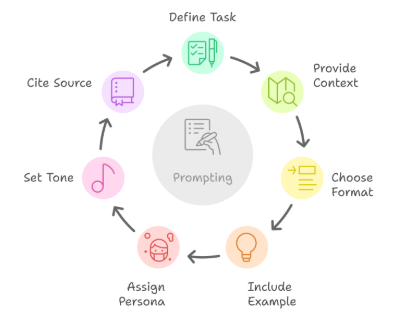
Figure: Effective Prompting
- Task (งาน) — สิ่งที่ต้องการให้ AI ทำ (เช่น สรุป, วิเคราะห์, แปล)
- Context (บริบท) — ข้อมูลเบื้องหลังที่จำเป็น
- Format (รูปแบบ) — กำหนดโครงสร้างผลลัพธ์ที่ต้องการ
- Example (ตัวอย่าง) — ให้ตัวอย่างผลลัพธ์ที่ต้องการ
- Persona (บุคลิก) — กำหนดบทบาทให้ AI
- Tone (โทนเสียง) — ลักษณะการใช้ภาษา
- Source (แหล่งข้อมูล) — อ้างอิงข้อมูลที่ชัดเจน
💡 เคล็ดลับ: ไม่จำเป็นต้องใช้ทุกองค์ประกอบ แต่ยิ่งใช้มาก ผลลัพธ์ยิ่งดี!
แน่นอนว่าเนื้อหาในบทนี้คือ สรุป (Task = Summarization) ดังนั้นสิ่งที่เราควรรู้จักต่อมาคือ Format เราควรรู้ว่าสรุปที่ดีนั้นมีกี่ Format ให้เลือกบ้าง
✨ Tips ในการเลือกใช้รูปแบบ
- ติดตามงาน & การมอบหมาย: Action Summary / Table
- สื่อสารกับผู้บริหาร: Executive Summary / Narrative
- ต้องการหลักฐาน/มีข้อกฎหมาย: Formal Meeting Minutes
- รายงานประชุมที่มีหลายหัวข้อ: Chronological / Bullet Point
- ประชุมสั้นแบบรายวัน: (Daily Standup): Bullet Point / Action Summary
Case 1️⃣: สรุปแบบ Executive Summary
- Prompt
"สรุป Email ด้านบนว่าเค้าอยากให้ผมทำอะไร แบบ Executive Summary ใช้ภาษาไทยเป็นหลัก"
- Task: สรุป Email ด้านบน
- Context: ว่าเค้าอยากให้ผมทำอะไร + ใช้ภาษาไทยเป็นหลัก
- Format: แบบ Executive Summary
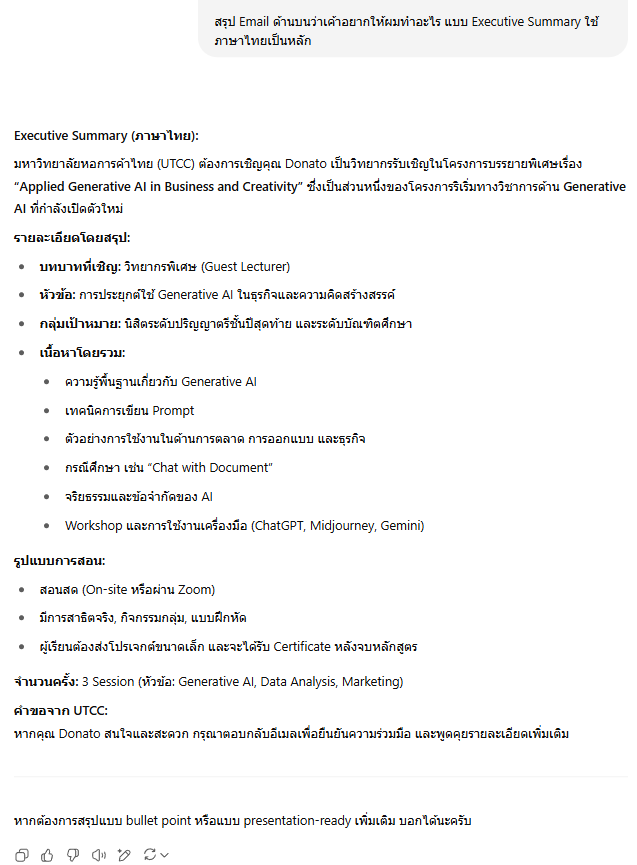
Figure: Output of สรุป Email ด้านบนว่าเค้าอยากให้ผมทำอะไร แบบ Executive Summary ใช้ภาษาไทยเป็นหลัก
Case 2️⃣: สรุปแบบ One Paragraph Summary
- Prompt
"สรุป Email ด้านบนว่าเค้าอยากให้ผมทำอะไร แบบ Executive Summary ใช้ภาษาไทยเป็นหลัก"
- Task: สรุป Email ด้านบน
- Context: ว่าเค้าอยากให้ผมทำอะไร + ใช้ภาษาไทยเป็นหลัก
- Format: แบบ One Paragraph Summary
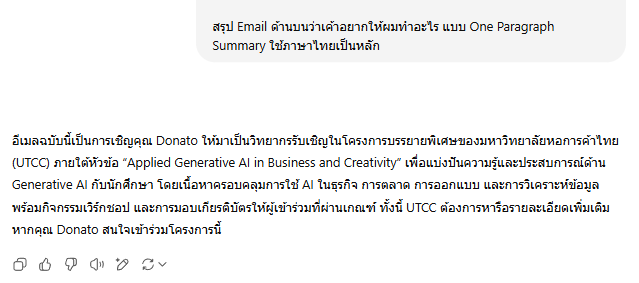
Figure: Output of สรุป Email ด้านบนว่าเค้าอยากให้ผมทำอะไร แบบ One Paragraph Summary ใช้ภาษาไทยเป็นหลัก
📝 เทคนิคเล็กๆ ที่ผมใช้บ่อย
- ใส่
""" ข้อความ """ครอบข้อความอ้างอิงที่เราจะใช้ - ใส่ persona เช่น “คุณคือเลขาฯ มากประสบการณ์” เพื่อให้ตอบในมุมมองที่ต้องการ
- ลองหลายๆ Format เพื่อหาสไตล์ที่เหมาะกับบริบทงานนั้นๆ
🧠 เมื่อเข้าใจ “Prompt ที่ดี” แล้ว…
สิ่งสำคัญถัดมาคือ “Framework ที่เราเลือกใช้” เพราะถึงแม้จะใช้ Prompt เดียวกัน แต่ถ้าเปลี่ยน Framework — ผลลัพธ์ที่ได้ก็อาจต่างกันลิบลับ!
ลองดูตัวอย่าง Framework ที่นิยมใช้ในการ สรุปเนื้อหา ด้านล่างนี้ครับ
✨ ตัวอย่างการเลือกใช้ Framework ตามเป้าหมาย
- สรุปการประชุมแบบมืออาชีพ: ใช้ SCQA, 5W1H, Timeline
- สรุปบทเรียนหรือคอร์สเรียน: ใช้ Cornell Notes, TACO
- สรุปเพื่อขายหรือเสนอผลงาน: ใช้ AIDA, STAR
- สรุปเนื้อหาหลายมุมมองหรือเชิงวิเคราะห์: ใช้ MECE
- เขียนบทความหรือข่าวสารให้น่าสนใจ: ใช้ Summary Pyramid, SCQA
Case 3️⃣: สรุป Email ด้วย SCQA Framework (ภาษาไทย)
- Prompt
"สรุป Email ด้านบนว่าแบบ SCQA Framework ใช้ภาษาไทยเป็นหลัก"
- Output
สรุปอีเมลตามโครงสร้าง SCQA (Situation – Complication – Question – Answer) โดยใช้ภาษาไทยเป็นหลัก ได้ดังนี้:
🟦 S - Situation (สถานการณ์)
มหาวิทยาลัยหอการค้าไทย (UTCC) กำลังผลักดันโครงการด้านนวัตกรรม โดยเปิดตัวชุดการบรรยายพิเศษเกี่ยวกับ "Generative AI" ซึ่งเป็นเทคโนโลยีที่เริ่มมีบทบาทสำคัญในหลายภาคธุรกิจ
🟥 C - Complication (ปัญหาหรือโอกาสที่เกิดขึ้น)
ด้วย Generative AI กำลังกลายเป็นเครื่องมือสำคัญในโลกธุรกิจและความคิดสร้างสรรค์ UTCC ต้องการให้คณาจารย์และนักศึกษาเข้าใจเทคโนโลยีนี้ในเชิงลึกมากขึ้น ผ่านผู้เชี่ยวชาญจากภายนอก
🟨 Q - Question (คำถามหรือเป้าหมาย)
UTCC จึงตั้งคำถามว่า:
ใครที่เหมาะสมจะมาแบ่งปันความรู้และประสบการณ์ในด้าน Generative AI อย่างมีคุณภาพและเป็นประโยชน์ต่อผู้เรียน?
🟩 A - Answer (คำตอบหรือข้อเสนอ)
ทางมหาวิทยาลัยจึงขอเชิญ คุณ Donato มาร่วมเป็นวิทยากรรับเชิญในหัวข้อ
“Applied Generative AI in Business and Creativity”
โดยมีรายละเอียดดังนี้:
- วัตถุประสงค์: แนะนำ Generative AI, ฝึกการใช้งานจริง, ศึกษาเคสธุรกิจ
- หัวข้อ: ตั้งแต่พื้นฐาน Prompt ไปจนถึง Case Study และจริยธรรม
- รูปแบบ: เรียนสด/Zoom, Workshop, Q&A, Assignment, ใบประกาศนียบัตร
- กลุ่มเป้าหมาย: นักศึกษาระดับปริญญาตรี/โท ที่มีความสนใจ (ไม่จำเป็นต้องเขียนโปรแกรมได้)
หากคุณ Donato สนใจ กรุณาตอบกลับเพื่อพูดคุยรายละเอียดเพิ่มเติม
สรุปคือ: ChatGPT ช่วยให้เราสรุปข้อมูลได้อย่างรวดเร็วและมีประสิทธิภาพ โดยเราสามารถเลือกรูปแบบการสรุปและ Framework ที่เหมาะสมกับสถานการณ์ได้
2. AI Writing Assistant
เมื่อ Donato เข้าใจเนื้อหาแล้ว…ก็ถึงเวลาตอบกลับอีเมล!

สิ่งที่เราต้องคำนึงก่อนสั่ง ChatGPT คือ:
- ① สไตล์การตอบอีเมล (Response Style)
- ② รูปแบบความยาว (Email Format)
💡 Tips: เลือกใช้ยังไงดี?
- ตอบยืนยันสั้นๆ → ใช้ One-liner หรือ Short Reply
- ตอบเชิญงานทางการ → ใช้ Professional Style + 3 Paragraph
- ตอบเพื่อนร่วมงาน → ใช้ Friendly + Short Reply
- ตอบแบบมีหลายประเด็น → ใช้ Q&A Style หรือ STAR
Case 4️⃣: Email Response (Professional Style + 3 Paragraph Format)
- Prompt
"""
Subject: Invitation to Guest Lecture on Generative AI at the University of the Thai Chamber of Commerce
Dear Mr. Donato,
We hope this email finds you well. On behalf of the University of the Thai Chamber of Commerce (UTCC), we would like to extend our warmest greetings and appreciation for your contributions to the field of data science and artificial intelligence.
The University of the Thai Chamber of Commerce is one of Thailand's leading private institutions with a long-standing commitment to bridging academic excellence with real-world business practices. Our mission is to prepare future leaders by providing them with the knowledge and skills required in the rapidly evolving global economy.
As part of our commitment to staying at the forefront of innovation, we are launching a new academic initiative focused on Generative Artificial Intelligence (Generative AI). This technology has become increasingly influential across various sectors - from marketing and content creation to product design and education. We believe it is crucial for our students and faculty to gain deeper insight into how Generative AI works and how it can be practically applied.
With your strong background and hands-on experience in data science and generative AI, we are honored to invite you to be a guest lecturer in our upcoming special series on "Applied Generative AI in Business and Creativity." We believe your knowledge and insights will be immensely valuable to our academic community.
🧾 Program Details: Special Lecture Series
<ย่อๆ>
📎 7. Additional Information
- Open to senior undergraduate and postgraduate students
- No prior programming required; curiosity encouraged!
- Students must bring their own laptop or tablet
We sincerely hope you will consider joining us in this exciting educational endeavor. If you are interested and available, please kindly reply to this email at your earliest convenience so we may discuss further details.
Warm regards,
Dr. Narumol K.
Director, School of Innovation and Technology
University of the Thai Chamber of Commerce
narumol.k@utcc.ac.th
"""
ช่วยเขียน Email Reply เนื้อหาด้านบน ให้เป็น Professional Style และ 3 Paragraph Format
- Output
Subject: Re: Invitation to Guest Lecture on Generative AI at UTCC
Dear Dr. Narumol,
Thank you very much for your kind invitation and for considering me for the special lecture series on "Applied Generative AI in Business and Creativity" at the University of the Thai Chamber of Commerce. I am honored by the opportunity and deeply appreciate your recognition of my work in the fields of data science and artificial intelligence.
I find the objectives and structure of the program to be highly relevant and impactful, especially in equipping students with practical skills in emerging AI technologies. The emphasis on both business applications and creative innovation aligns well with my experience and passion for bridging technical knowledge with real-world problem solving.
I would be delighted to join the program as a guest lecturer. Please feel free to share further details regarding the timeline, logistics, and any preparations needed. I look forward to contributing to this meaningful initiative and engaging with your students and faculty.
Warm regards,
Donato
Data Scientist & AI Consultant
[Email Signature]
- ③ Framework ที่เหมาะกับสถานการณ์
✅ 1. OABC (นิยมที่สุดในงานธุรกิจ)
- Opening: ทักทาย และกล่าวถึงเหตุผลที่เขียน
- Agenda: แจ้งว่าอีเมลนี้มีเนื้อหาอะไร
- Body: ขยายเนื้อหา, ใส่รายละเอียด
- Closing: ปิดท้ายด้วยคำขอบคุณ หรือคำขอให้ตอบกลับ
✅ 2. BLUF (สำหรับผู้บริหาร)
- เริ่มด้วยประเด็นหลัก → แล้วค่อยขยายรายละเอียด
- เหมาะกับอีเมลสั้น กระชับ
Ex: “I recommend postponing the launch to Q4. Here’s why…”
✅ 3. AIDA (สายการตลาด/เชิญชวน)
- A: เปิดให้น่าสนใจ
- I: สร้างความสนใจต่อเนื้อหา
- D: โน้มน้าวให้สนใจมากขึ้น
- A: ปิดท้ายด้วย Call to Action
✅ 4. PPP (เมื่อมีปัญหา/ข้อเสนอ)
- Praise: เริ่มต้นด้วยคำชม/บวก
- Problem: ระบุปัญหาอย่างชัดเจน
- Proposal: เสนอทางออกหรือสิ่งที่ต้องการ
✅ 5. 3P (สำหรับ Project Updates)
- Purpose: แจ้งวัตถุประสงค์ของอีเมล
- Progress: ความคืบหน้า
- Plan: แผนถัดไป หรือคำขอให้ผู้รับดำเนินการ
Case 5️⃣: Email Response (Concise Style + OABC Framework)
"""
Subject: Invitation to Guest Lecture on Generative AI at the University of the Thai Chamber of Commerce
Dear Mr. Donato,
We hope this email finds you well. On behalf of the University of the Thai Chamber of Commerce (UTCC), we would like to extend our warmest greetings and appreciation for your contributions to the field of data science and artificial intelligence.
The University of the Thai Chamber of Commerce is one of Thailand's leading private institutions with a long-standing commitment to bridging academic excellence with real-world business practices. Our mission is to prepare future leaders by providing them with the knowledge and skills required in the rapidly evolving global economy.
As part of our commitment to staying at the forefront of innovation, we are launching a new academic initiative focused on Generative Artificial Intelligence (Generative AI). This technology has become increasingly influential across various sectors - from marketing and content creation to product design and education. We believe it is crucial for our students and faculty to gain deeper insight into how Generative AI works and how it can be practically applied.
With your strong background and hands-on experience in data science and generative AI, we are honored to invite you to be a guest lecturer in our upcoming special series on "Applied Generative AI in Business and Creativity." We believe your knowledge and insights will be immensely valuable to our academic community.
🧾 Program Details: Special Lecture Series
<ย่อๆ>
📎 7. Additional Information
- Open to senior undergraduate and postgraduate students
- No prior programming required; curiosity encouraged!
- Students must bring their own laptop or tablet
We sincerely hope you will consider joining us in this exciting educational endeavor. If you are interested and available, please kindly reply to this email at your earliest convenience so we may discuss further details.
Warm regards,
Dr. Narumol K.
Director, School of Innovation and Technology
University of the Thai Chamber of Commerce
narumol.k@utcc.ac.th
"""
ช่วยเขียน Email Reply เนื้อหาด้านบน ให้เป็น Concise Style และ OABC Framework
- Output
Subject: Re: Guest Lecture Invitation on Generative AI at UTCC
Dear Dr. Narumol,
Opening:
Thank you very much for your kind invitation and for considering me as a guest lecturer in your upcoming series on “Applied Generative AI in Business and Creativity.”
Agenda:
I’m honored by the opportunity and fully support UTCC’s initiative to promote practical AI knowledge among students.
Body:
The program structure, key topics, and learning outcomes align well with my expertise and passion. I’m particularly excited about the hands-on session and the opportunity to engage with students on real-world applications of Generative AI.
Please feel free to share the next steps regarding schedule, preparation, or materials needed. I am available for a brief call or meeting to finalize the details.
Closing:
Thank you again for this opportunity. I look forward to collaborating with your team.
Warm regards,
Donato
Data Scientist & AI Consultant
[Optional: Phone | LinkedIn | Website]
สรุปคือ: ChatGPT ช่วยให้เราเขียนอีเมลตอบกลับได้อย่างมืออาชีพ โดยเราสามารถกำหนดสไตล์ รูปแบบ และ Framework ที่เหมาะสมกับสถานการณ์ได้
นอกจากตอบกลับ Email แล้ว Writing ยังมีหัวข้ออีกมากมาย อาทิ
- Feedback: Framework ที่นิยมได้แก่
ถ้าต้องเลือกใช้ 1 ตัวที่ง่ายและใช้ได้ในชีวิตจริงกับลูกน้อง ผมแนะนำ SBI ครับ เพราะตรงไปตรงมา ชัดเจน และลดความรู้สึกถูกตำหนิแบบส่วนตัว หรือถ้าอยากให้ละเอียดขึ้น ผมจะใช้ SBI+C+A
ตัวอย่าง: เมื่อวานตอนประชุมกับลูกค้า (Situation), คุณพูดขัดลูกค้าหลายครั้ง (Behavior), ทำให้การนำเสนอดูไม่ราบรื่นและลูกค้าเริ่มไม่สบายใจ (Impact)
- Minutes of Meeting: Framework ที่นิยมใช้ในการเขียน MoM
- Job Description: โครงสร้างมาตรฐานของ JD
ChatGPT รองรับ Input ได้หลากหลายกว่าที่คิด
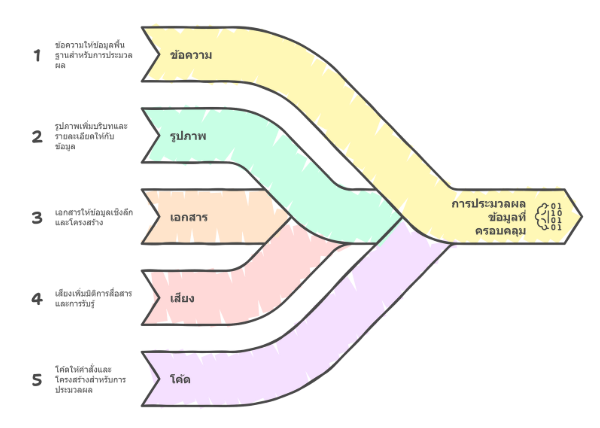
ก่อนจะไปต่อ ลองมาดูกันก่อนว่า รูปแบบข้อมูล ที่ ChatGPT รองรับมีอะไรบ้าง:
- 📄 ข้อความ (Text): พิมพ์ได้ตามปกติ
- 🖼️ รูปภาพ (Image): อัปโหลดภาพให้วิเคราะห์หรือสรุป
- 📁 ไฟล์เอกสาร: PDF, DOCX, PPTX, CSV, XLSX, TXT ฯลฯ
- 🔊 เสียง (Audio): ใช้ฟีเจอร์ voice หรือ transcription
- 💻 โค้ด (Code): รองรับการวิเคราะห์โค้ดและรันผ่าน Code Interpreter
Case 6️⃣: Image Summarization
เราจะลองใช้ ChatGPT เพื่อสรุป Infographic ด้านล่างนี้
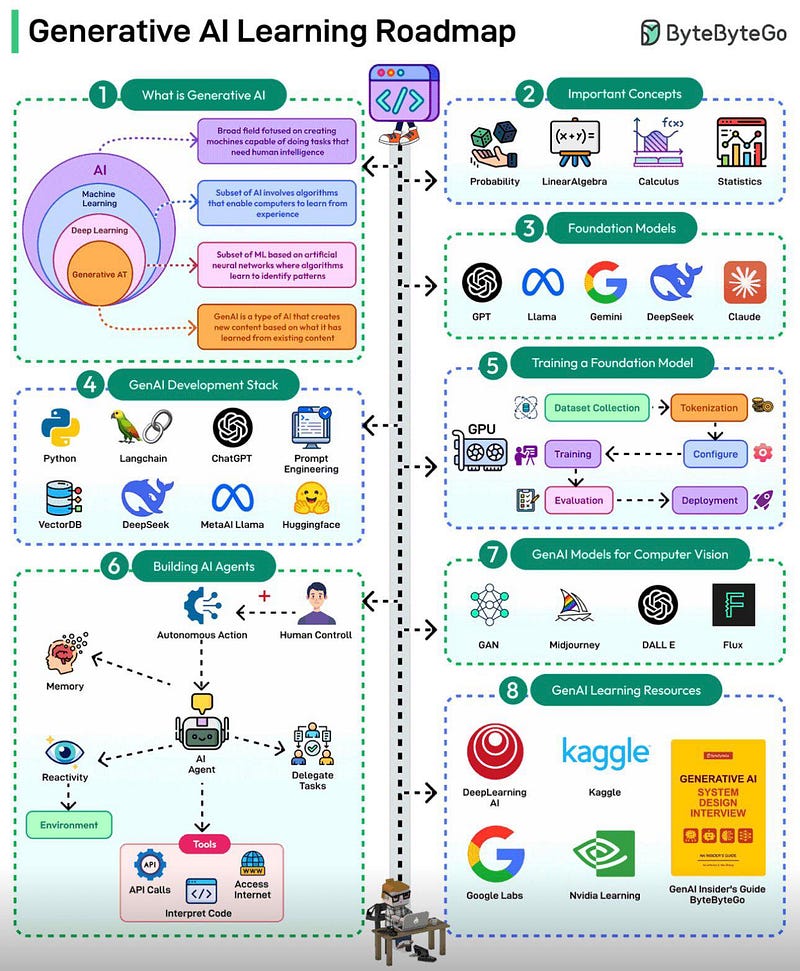
Figure: Input for Image Summarization
- Prompt
" สรุป Infograhic ด้านบนแบบ Topic and Subtopic ใช้ภาษาไทยเป็นหลัก"
- Output
ได้เลยครับ นี่คือสรุป Infographic: Generative AI Learning Roadmap แบบแยกหัวข้อ (Topic) และหัวข้อย่อย (Subtopic) เป็นภาษาไทย:
- คืออะไร: Generative AI
- AI (Artificial Intelligence): สร้างเครื่องจักรให้ทำงานแทนมนุษย์
- Machine Learning (ML): อัลกอริธึมที่เรียนรู้จากข้อมูล
- Deep Learning: ML แบบใช้โครงข่ายประสาทเทียม
- Generative AI: AI ที่สามารถสร้างเนื้อหาใหม่จากสิ่งที่เรียนรู้
- แนวคิดพื้นฐาน (Important Concepts)
- ความน่าจะเป็น (Probability)
- พีชคณิตเชิงเส้น (Linear Algebra)
- แคลคูลัส (Calculus)
- สถิติ (Statistics)
- โมเดลพื้นฐาน (Foundation Models)
- GPT
- Llama
- Gemini
- DeepSeek
- Claude
- เทคโนโลยีที่เกี่ยวข้อง (GenAI Development Stack)
- ภาษาโปรแกรม: Python
- เครื่องมือ: LangChain, Prompt Engineering, Huggingface
- แพลตฟอร์มโมเดล: ChatGPT, DeepSeek, MetaAI Llama
- ฐานข้อมูลเวกเตอร์: VectorDB
- การฝึกโมเดลพื้นฐาน (Training a Foundation Model)
- การเก็บข้อมูล (Dataset Collection)
- การแปลงคำ (Tokenization)
- การตั้งค่าระบบ (Configure)
- การฝึก (Training)
- การประเมิน (Evaluation)
- การนำไปใช้งาน (Deployment)
- การสร้าง AI Agents (Building AI Agents)
- การกระทำแบบอัตโนมัติ (Autonomous Action)
- การควบคุมโดยมนุษย์ (Human Control)
- ความจำ (Memory), การตอบสนอง (Reactivity), การมอบหมายงาน (Delegate Tasks)
- การเชื่อมต่อกับสิ่งแวดล้อม (Environment)
- เครื่องมือ: API Calls, Interpret Code, Access Internet
- โมเดลสำหรับงานภาพ (GenAI Models for Computer Vision)
- GAN
- Midjourney
- DALL·E
- Flux
- แหล่งเรียนรู้ (GenAI Learning Resources)
- DeepLearning.AI
- Kaggle
- หนังสือ Generative AI System Design Interview
- Google Labs
- Nvidia Learning
- คู่มือจาก ByteByteGo
หากต้องการสรุปให้อยู่ในรูปแบบ Mind Map หรือ Bullet Point ย่อเพิ่มเติม บอกได้เลยครับ!
จากสรุปธรรมดา → สู่ “Custom GPTs”

เมื่อ Donato เริ่มใช้ ChatGPT สรุปเอกสารหรือเขียน Email บ่อยครั้ง
เขาพบว่าต้องใช้ Prompt เดิมซ้ำๆ จึงเริ่มสนใจสิ่งที่เรียกว่า “Custom GPTs”
My GPTs: สร้างผู้ช่วยเฉพาะของคุณเอง
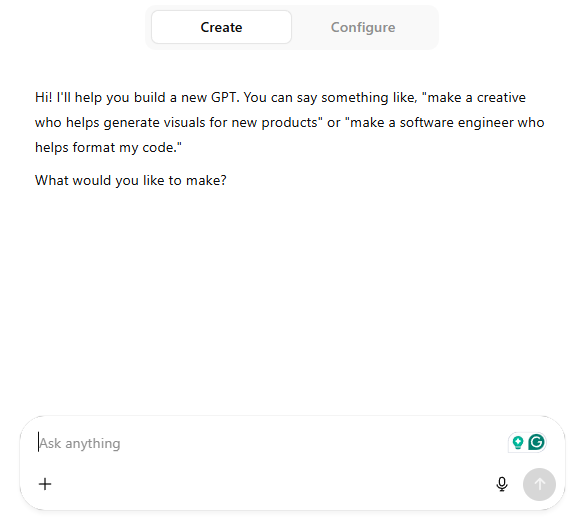
ChatGPT ออกฟีเจอร์ My GPTs ที่ให้คุณสร้าง “GPT ส่วนตัว” ที่ทำงานแบบอัตโนมัติในรูปแบบที่คุณต้องการ
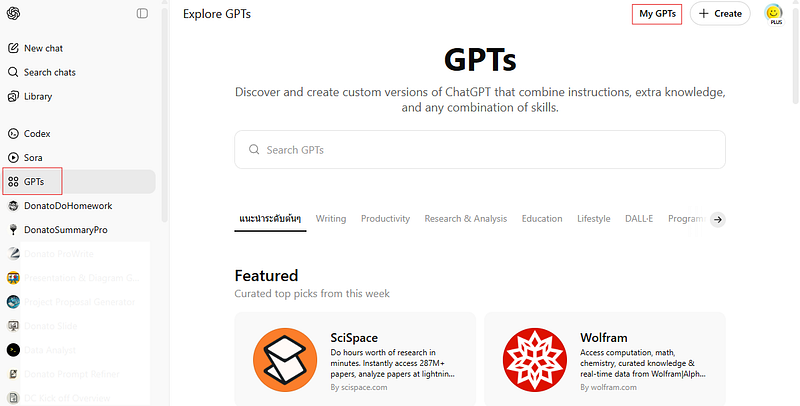
เมื่อกด Create คุณสามารถกำหนดค่าได้ดังนี้:
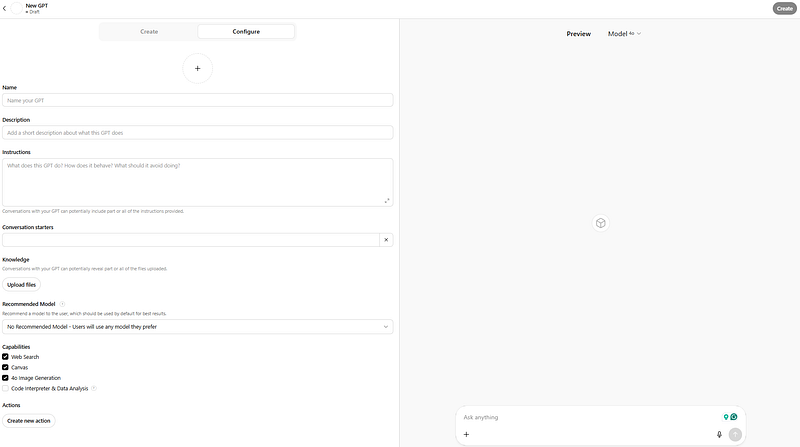
- Name / Description: ตั้งชื่อและคำอธิบาย
- Instructions: บอกว่า GPT นี้ควรทำอะไร หลีกเลี่ยงอะไร
- Conversation Starters: Pre-prompt ที่จะแสดงเมื่อเราเลือก My GPTs
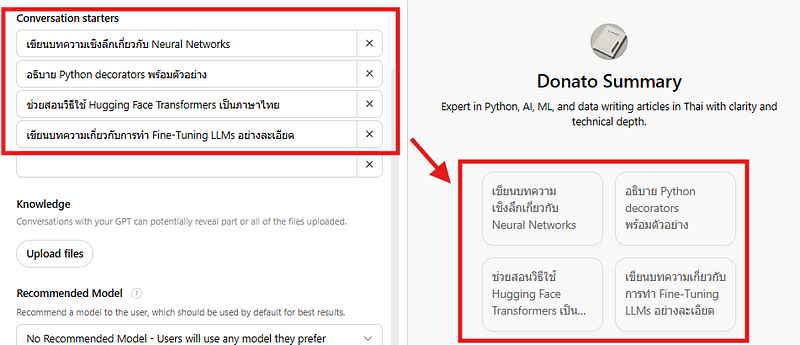
- Knowledge: อัปโหลดเอกสารหรือความรู้เพิ่มเติมได้
- Model: เลือกเวอร์ชัน GPT เช่น
-GPT-4o– รองรับภาพ เสียง ความเร็วสูง (เปิดตัวปี 2024)
-GPT-4.1– เก่งกว่า 4o (เปิดตัวปี 2025)
-GPT-4.1-mini– เร็วกว่า ประหยัด Token
-o3,o4-mini,o4-mini-high– Reasoning Model - Capabilities:
- Web Search 🌐
- Canvas (ภาพ/แผนภาพ) 🎨
- 4o Image Generation 🖼️
- Code Interpreter / Data Analysis 💻 - Actions:
เพิ่ม action ได้เช่น call API เพื่อ link กับ application อื่นๆ
หรือถ้าคุณไม่อยากตั้งค่าด้วยตัวเอง แค่พิมพ์สิ่งที่อยากให้ GPT ทำ แล้วให้มันสร้างให้เลยก็ได้
⚠️ ข้อจำกัด: Token ไม่ใช่ปัญหาเล็ก
แม้ตอนนี้ ChatGPT จะอ่านไฟล์ใหญ่ได้ แต่ ผลลัพธ์ที่ตอบกลับมา ยังจำกัดที่ ~8,000 Token เปรียบง่ายๆ:
- ถ้าเอกสารมี 800,000 ตัวอักษร → สรุปออกมาได้แค่ ~8,000 (สรุปหยาบๆ 1:100)
- เอกสารมี 80,000 ตัวอักษร → ได้สรุปที่ละเอียดขึ้น (สรุป ~1:10)
🛠 วิธีแก้:
- แบ่งเอกสารออกเป็น ตอน / Section / Chapter
- ใช้ Prompt แบบ chunked
- สั่งให้สรุปแบบเจาะจงทีละหัวข้อ
มาลองดูตัวอย่างกันครับ
Case 7️⃣: Summary with Token Limitation

Download: https://drive.google.com/file/d/191no-eMBC-8AvhEcUtOj%5FRbfhOCB5GyA/view?usp=drive%5Flink or https://workspace.google.com/learning/content/gemini-prompt-guide
🅰️ สรุปแบบทั่วไป
- Prompt 🅰️:
ช่วยทำผมความเข้าใจเนื้อหาในเอกสาร แบบครบถ้วน
ชื่อเรื่อง Prompting Guide 101: A quick start handbook for effective prompts
- Result 🅰️:
เอกสาร “Prompting Guide 101: A quick-start handbook for effective prompts” คือคู่มือที่จัดทำโดย Google Workspace (เมษายน 2024) เพื่อสอนวิธีการเขียน “Prompt” อย่างมีประสิทธิภาพในการใช้งาน AI Gemini ร่วมกับแอปต่าง ๆ เช่น Gmail, Docs, Sheets, Slides และ Meet โดยสรุปเนื้อหาหลักได้ดังนี้:
🔹 หลักการพื้นฐานของการเขียน Prompt ที่ดี
- Prompt = จุดเริ่มต้นของบทสนทนากับ AI
- ใช้เพื่อสั่งให้ AI สร้างสรรค์/วิเคราะห์/เขียน/สรุปงานต่าง ๆ
- ควรประกอบด้วย 4 องค์ประกอบหลัก (ไม่จำเป็นต้องครบทุกข้อ):
- Persona: ระบุบทบาท เช่น “คุณคือผู้จัดการฝ่ายขาย…”
- Task: ระบุสิ่งที่ต้องการให้ AI ทำ เช่น “เขียนอีเมลตอบกลับลูกค้า”
- Context: ให้ข้อมูลพื้นหลังหรือบริบท
- Format: ระบุรูปแบบผลลัพธ์ เช่น bullet points, formal tone
🧠 แนวทางการเขียน Prompt
- ใช้ภาษาธรรมชาติ เหมือนคุยกับคน
- ระบุให้ชัดเจนและให้ข้อมูลที่จำเป็น
- เขียนให้กระชับแต่ไม่คลุมเครือ
- ปรับแต่ง/ถามซ้ำ/ใช้ feedback เพื่อ refine คำสั่ง
🔹 การประยุกต์ใช้ Prompt ตามบทบาทต่าง ๆ
- Customer Service
- เขียนอีเมลตอบลูกค้าที่ไม่พอใจ
- สร้าง Template การสื่อสาร
- สรุปนโยบายการคืนสินค้า
- จัดทำ survey เพื่อปรับปรุงบริการ
- Executives & Entrepreneurs
- เขียนอีเมลประชุมคณะกรรมการ
- เตรียมคำตอบ Q&A สำหรับ Town Hall
- วิเคราะห์คู่แข่ง
- เขียนสุนทรพจน์ที่สร้างแรงบันดาลใจ
- Human Resources (HR)
- เขียนสคริปต์ onboarding
- สร้างตารางงานสัปดาห์แรกของพนักงาน
- สร้างกิจกรรมสานสัมพันธ์ในทีม
- สรุป feedback จากแบบสอบถาม
- Marketing
- สร้าง content strategy, blog, social posts
- A/B test messages
- สร้างภาพโฆษณาด้วย Gemini
- สร้าง landing page และ nurture campaign
- Project Management
- สรุปรายงานประชุมและการตัดสินใจ
- เขียน retrospective และถอดบทเรียน
- สร้าง template ติดตาม issue และ progress
- สร้างอีเมลแจ้งปัญหาให้ stakeholder
- Sales
- เขียนอีเมลติดต่อผู้มุ่งหวัง (prospect)
- ทำ research ลูกค้าและอุตสาหกรรม
- เขียน elevator pitch
- เตรียมสคริปต์การขายพร้อมตอบข้อโต้แย้ง
✍️ เทคนิคการเขียน Prompt ขั้นสูง
- แบ่งคำสั่งออกเป็นหลายขั้น
- จำกัดเงื่อนไข เช่น ความยาว, จำนวนข้อ
- กำหนดบทบาท (Persona) ให้ AI ชัดเจน
- ขอ feedback กลับจาก AI
- ระบุโทนภาษาที่ต้องการ (เช่น: formal, creative)
- ปรับแก้ซ้ำเพื่อให้ได้ผลลัพธ์ที่ดีขึ้น
✅ สรุป Key Takeaways
- Gemini for Google Workspace คือผู้ช่วย AI ที่สามารถทำงานแทนได้ในหลายมิติ เช่น เขียน จัดการ วิเคราะห์ และสร้างภาพ
- เขียน prompt ที่ดี = ทำงานได้เร็วขึ้น มีประสิทธิภาพมากขึ้น
- เอกสารนี้ช่วยสร้างพื้นฐานการใช้ AI ในงานจริง โดยเฉพาะสำหรับคนทำงานทุกสาย
จะเห็นได้ว่า ด้วย Token limitation นั้นทำให้ในส่วนของ Customer Service มีเนื้อหาตามด้านล่าง
- เขียนอีเมลตอบลูกค้าที่ไม่พอใจ
- สร้าง Template การสื่อสาร
- สรุปนโยบายการคืนสินค้า
- จัดทำ survey เพื่อปรับปรุงบริการ
แต่ถ้าอยาก Focus แค่ในส่วนของ Customer Service สามารถทำได้โดยหลายวิธีตามด้านบน แต่ในที่นี้จะยกตัวอย่างแบบ “ใช้ Prompt แบบ chunked”
🅱️ สรุปแบบใช้ Prompt แบบ chunked
- Prompt 🅱️:
ช่วยทำผมความเข้าใจเนื้อหาในเอกสาร เฉพาะ หน้า 7–12 (หมวด Customer Service) แบบครบถ้วน
ชื่อเรื่อง Prompting Guide 101: A quick start handbook for effective prompts
- Result 🅱️:
สรุปเนื้อหา Prompting Guide 101 เฉพาะ หน้า 7–12 (หมวด Customer Service) แบบครบถ้วนและเข้าใจง่าย มีดังนี้:
💼 Customer Service: ใช้งาน Gemini เพื่อปรับปรุงบริการลูกค้า
📌 เป้าหมาย
ใช้ Gemini for Google Workspace เพื่อเพิ่มประสิทธิภาพการทำงานของทีมบริการลูกค้า เช่น:
- สร้างมาตรฐานในการสื่อสาร
- เขียนอีเมลตอบกลับลูกค้า
- ลดภาระงานซ้ำซ้อน
- รวบรวมข้อมูลเสียงจากลูกค้า
- เตรียมตัวประชุมกับลูกค้า
🧩 แนวทางใช้งาน Gemini ในสถานการณ์ต่าง ๆ
- ตอบข้อร้องเรียนของลูกค้า (Damaged Goods Case)
- พนักงานบริการลูกค้าใช้งานฟีเจอร์ Help me write ใน Google Docs เพื่อเขียนอีเมลอย่างเห็นอกเห็นใจ
- โครงสร้าง prompt:
“Help me craft an empathetic email response…”
(อธิบายสถานการณ์, สิ่งที่ลูกค้าร้องขอ, สิ่งที่บริษัทเสนอ, ให้ Gemini ช่วยร่างอีเมล + bullet point ทางออก 3 ทาง)
- จากนั้นใช้ prompt ถัดไป:
“Suggest 10 alternative options in place of expedited shipping…”
- ผู้จัดการฝ่ายบริการลูกค้า
🔸Use Case: สร้างมาตรฐานการสื่อสาร
- ร่าง template อีเมล 3 แบบ: ขอโทษ, ยืนยันออเดอร์, ขอบคุณลูกค้า
- ร่าง แนวทางสื่อสารที่ดีที่สุด สำหรับพนักงานใหม่
- ตัวอย่าง prompt:
“Craft a list of customer communication best practices…”
- สร้าง สคริปต์โทรศัพท์ สำหรับพนักงาน เช่น คำกล่าวเปิด-ปิด, การปรับแต่งด้วยข้อมูลลูกค้า
🔸Use Case: ปรับปรุงประสบการณ์ลูกค้า
- ส่งอีเมลเชิญหัวหน้าแผนกต่าง ๆ มาประชุมเรื่อง customer experience improvement
- สร้าง Google Sheet เพื่อติดตาม progress และ impact ของมาตรการต่าง ๆ เช่น support ticket volume
- Customer Support Specialist
🔸Use Case: ให้ลูกค้า self-service ได้ง่ายขึ้น
- สรุปและเรียบเรียง นโยบายการคืนสินค้า/ขอเงินคืน/เครดิต ให้เข้าใจง่าย 5 ขั้นตอน
- นำไปใช้สร้าง บล็อก และ template อีเมล แนะนำลูกค้าให้ใช้ข้อมูลเหล่านี้
- Voice of the Customer Research
- ใช้ Gemini ร่างอีเมลนัดลูกค้าที่ให้ feedback แง่ลบ เพื่อพูดคุยและหาทางแก้
- ใช้ฟีเจอร์ “Refine > Elaborate” เพื่อปรับโทนให้เหมาะสม
- สร้างแบบสอบถามหลังคุยกับลูกค้า 5 คำถาม เช่น ความพึงพอใจ, ความช่วยเหลือที่ได้รับ
- Client Services Coordinator
🔹Use Case: เก็บ feedback จากลูกค้าประจำ
- ส่งอีเมลเชิญเข้าร่วม session ฟังความคิดเห็น
- หลังจบ event ใช้ Gemini ช่วยร่างอีเมลขอบคุณรายคน
🔹Use Case: เตรียมตัวประชุมลูกค้าใหม่
- ใช้ Gemini สร้าง 5 คำถามสำหรับศึกษาธุรกิจของลูกค้าในอุตสาหกรรมใหม่
- สรุปข้อมูลจาก note ให้เป็น bullet points ใช้ในการประชุม
- สร้างอีเมลแนะนำตัวและนัดประชุม
💡 สรุปแนวทางการใช้ Prompt
- ใช้โครงสร้าง 4 อย่าง: Persona, Task, Context, Format
- ใช้ Gemini ใน Google Docs, Gmail, Sheets หรือ gemini.google.com ได้ตามบริบท
- ปรับแต่ง output ได้หลายรอบเพื่อให้ตรงกับความต้องการ
จะเห็นได้ว่า Output ของ Customer Segmentation ใน case 🅱️ นั้นมีรายละเอียดที่เยอะกว่า case 🅰️ อย่างมีนัยะสำคัญ
Prompt Engineering
Part 1: Basic Prompting (พื้นฐานการเขียนพรอมต์)
1.1 Structure (โครงสร้างของพรอมต์ที่ดี)
Figure: Effective Prompting
Recap โครงสร้าง Prompt ที่ดีนั้นเบื้องต้นเหมือนที่ได้กล่าวไว้ในข้างต้นคือต้องมี
- Task (งาน) — สิ่งที่ต้องการให้ AI ทำ (เช่น สรุป, วิเคราะห์, แปล)
- Context (บริบท) — ข้อมูลเบื้องหลังที่จำเป็น
- Format (รูปแบบ) — กำหนดโครงสร้างผลลัพธ์ที่ต้องการ
- Example (ตัวอย่าง) — ให้ตัวอย่างผลลัพธ์ที่ต้องการ
- Persona (บุคลิก) — กำหนดบทบาทให้ AI
- Tone (โทนเสียง) — ลักษณะการใช้ภาษา
- Source (แหล่งข้อมูล) — อ้างอิงข้อมูลที่ชัดเจน
💡 เคล็ดลับ: ไม่จำเป็นต้องใช้ทุกองค์ประกอบ แต่ยิ่งใช้มาก ผลลัพธ์ยิ่งดี!
ตัวอย่าง
Task
ช่วยสร้าง Regular Expression สำหรับภาษา JavaScript
Context
ฉันต้องการตรวจสอบความถูกต้องของเบอร์โทรศัพท์มือถือในประเทศไทย ซึ่งต้องขึ้นต้นด้วย 0 และตามด้วยตัวเลขอีก 9 ตัว (เช่น 0812345678, 0987654321)
Example
- รูปแบบที่ถูกต้อง: 0812345678
- รูปแบบที่ผิด: 812345678, 081-234-5678, 081234567
Format
ให้ตอบเฉพาะตัว Regular Expression เท่านั้น
1.2 Zero-shot, One-shot, Few-shot Prompting
ในหัวข้อนี้จะเป็นการขยายหมวด “Example (ตัวอย่าง)”
- Zero-shot: สั่งงานโดยไม่มีตัวอย่างเลย อาศัยความรู้เดิมของ AI
- One-shot: ให้ตัวอย่าง 1 ชุด เพื่อกำหนดทิศทางหรือรูปแบบ
- Few-shot: ให้ตัวอย่างตั้งแต่ 2 ชุดขึ้นไป เพื่อสอนรูปแบบที่ซับซ้อนยิ่งขึ้น
Zero-shot Prompting ตัวอย่างที่ 1
แปลประโยคนี้เป็นภาษาอังกฤษ: ฉันชอบไปเที่ยวทะเล
Zero-shot Prompting ตัวอย่างที่ 2
เขียน Caption ขายกาแฟเย็นให้ดูน่าสนใจ
One-shot Prompting ตัวอย่างที่ 1
ตัวอย่าง:
ถาม: สีของท้องฟ้าในตอนกลางวันคืออะไร?
ตอบ: สีฟ้า
ถาม: สีของใบไม้คืออะไร?
One-shot Prompting ตัวอย่างที่ 2
ตัวอย่าง:
แปล: ฉันหิว = I am hungry
แปล: ฉันง่วง
Few-shot Prompting ตัวอย่างที่ 1
ตัวอย่าง:
ถาม: 2 + 3 = ? ตอบ: 5
ถาม: 4 + 6 = ? ตอบ: 10
ถาม: 5 + 7 = ?
Few-shot Prompting ตัวอย่างที่ 2
ตัวอย่าง:
การเขียนคำโปรยสินค้า:
สินค้า: หมอนเพื่อสุขภาพ
คำโปรย: หลับสบายทุกคืน รองรับสรีระเพื่อสุขภาพที่ดี
สินค้า: แชมพูออร์แกนิก
คำโปรย: อ่อนโยนต่อหนังศีรษะ สกัดจากธรรมชาติ 100%
สินค้า: โคมไฟอ่านหนังสือ
1.3 Role Prompting (การกำหนดบทบาท)
ในหัวข้อนี้จะเป็นการขยายหมวด “Persona (บุคลิก)”
Persona ตัวอย่างที่ 1
คุณคือครูสอนเด็กประถม อธิบายคำว่า “พลังงาน” ให้เด็กอายุ 8 ขวบเข้าใจ
Persona ตัวอย่างที่ 2
คุณคือเชฟมืออาชีพ แนะนำเมนูง่าย ๆ ที่ทำจากไข่ แต่ดูน่ากิน
Persona ตัวอย่างที่ 3
คุณคือที่ปรึกษากฎหมาย ช่วยอธิบายให้เข้าใจง่าย ๆ ว่า “สัญญาเช่าบ้าน” ต้องมีอะไรบ้าง
1.4 Output Control (การควบคุมรูปแบบผลลัพธ์)
ในหัวข้อนี้จะเป็นการขยายหมวด “Format (รูปแบบ)”
Format ตัวอย่างที่ 1: ตาราง (Table / Markdown)
สรุปข้อดีของการออกกำลังกายเป็นตารางให้หน่อย
Format ตัวอย่างที่ 2:CSV (Comma-separated values)
แสดงรายชื่อผลไม้ 3 อย่าง พร้อมราคา (รูปแบบ CSV)
Format ตัวอย่างที่ 3: JSON (เหมาะกับนักเทคนิค/แอป)
สินค้าในร้าน:
- น้ำดื่ม ขวดละ 10 บาท
- ขนมปัง แถวละ 25 บาท
- นมกล่อง กล่องละ 15 บาท
สรุปข้อมูลสินค้าเป็น JSON
Format ที่ 4: Customize
งานอดิเรกของคน 3 คน:
- แพรว ชอบวาดรูป
- บาส ชอบเล่นดนตรี
- ตาล ชอบทำขนม
สรุปตามรูปแบบ “ชื่อ: ___ | งานอดิเรก: ___”
1.5 Tone Controlling (การควบคุมโทนและสไตล์)
ในหัวข้อนี้จะเป็นการขยายหมวด “Tone (โทนเสียง)”
Tone Controlling: ตัวอย่างที่ 1
อธิบายว่า AI คืออะไร ในแบบทางการ
Tone Controlling: ตัวอย่างที่ 2
อธิบายว่า AI คืออะไร แบบเป็นกันเอง เข้าใจง่าย
Part 2: A bit more Advanced Prompting (เทคนิคขั้นสูงขึ้น)
2.1 Chain of Thought (CoT) (การคิดเป็นลำดับขั้น)
เทคนิคที่สั่งให้ AI “คิดดังๆ” หรือแสดงเหตุผลเป็นขั้นเป็นตอนก่อนจะให้คำตอบสุดท้าย การทำแบบนี้จะช่วยให้ AI มีกระบวนการคิดที่เป็นเหตุเป็นผลมากขึ้น และมักจะให้คำตอบที่ถูกต้องในปัญหาที่ซับซ้อน
Chain of Thought (CoT): ตัวอย่างที่ 1
ฉันมีฟังก์ชัน JavaScript ที่คำนวณราคาส่วนลดสินค้าดังนี้:
function calculateDiscount(price, quantity, isMember) { ... }
เงื่อนไขคือ:
- ถ้าซื้อ 5 ชิ้นขึ้นไป ลด 10%
- ถ้าเป็นสมาชิก (isMember) ลดเพิ่มอีก 5%
- ส่วนลดทั้งสองอย่างสามารถใช้ร่วมกันได้ (ลด 10% ก่อน แล้วค่อยลดอีก 5% จากราคาที่ลดแล้ว)
- แต่ถ้าซื้อสินค้าราคาเกิน 1,000 บาท และเป็นสมาชิก จะได้ส่วนลดตายตัว 20% ทันที (ไม่คิดส่วนลดอื่น)
ช่วยเขียนโค้ดฟังก์ชัน calculateDiscount ให้ถูกต้องตามเงื่อนไขนี้หน่อย
สำคัญ: ก่อนเขียนโค้ด ช่วยอธิบายลำดับการคิดและเงื่อนไขต่างๆ เป็นขั้นเป็นตอนก่อน
Chain of Thought (CoT): ตัวอย่างที่ 2
โค้ด Python ด้านล่างนี้ควรจะลบ element ที่เป็นเลขคู่ออกจาก list แต่ผลลัพธ์กลับผิดพลาด
code = numbers = [1, 2, 3, 4, 5, 6, 7, 8] for i, num in enumerate(numbers): if num % 2 == 0: del numbers[i] print(numbers) # Expected: [1, 3, 5, 7], Actual: [1, 3, 5, 7, 8]
ช่วยวิเคราะห์ปัญหาทีละขั้นตอน:
- อธิบายว่าโค้ดนี้ทำงานอย่างไรในแต่ละ loop
- ชี้ให้เห็นว่าปัญหาเกิดจากอะไร (ทำไมการลบ item ระหว่าง loop ถึงเป็นปัญหา)
- เสนอวิธีแก้ไขที่ถูกต้อง 2 วิธี พร้อมอธิบายข้อดีข้อเสียของแต่ละวิธี
2.2 Tree of Thought (ToT) (การคิดแบบแตกแขนง)
ToT คือการให้ AI สำรวจทางเลือกหลายๆ ทาง ประเมินแต่ละทางเลือก แล้วค่อยสรุปเลือกทางที่ดีที่สุด เหมาะกับปัญหาที่ไม่มีคำตอบตายตัว เช่น การออกแบบระบบ
Tree of Thought (ToT): ตัวอย่างที่ 1
คุณคือ Senior Software Architect
เรากำลังจะออกแบบระบบ Caching สำหรับ API ที่ดึงข้อมูลสินค้าซึ่งไม่ค่อยเปลี่ยนแปลง
ช่วยสำรวจและประเมินทางเลือกในการทำ Caching 3 รูปแบบดังนี้:
- In-memory cache (เช่น เก็บใน global variable ของแอปพลิเคชัน)
- Distributed cache (เช่น Redis, Memcached)
- HTTP-level cache (ใช้ Cache-Control headers)
สำหรับแต่ละรูปแบบ:
- Explore: อธิบายหลักการทำงานสั้นๆ
- Evaluate: วิเคราะห์ข้อดีและข้อเสียในแง่ของ Performance, Scalability, และ Complexity
- Conclude: สุดท้าย ช่วยแนะนำว่าควรเลือกใช้รูปแบบไหนสำหรับระบบ E-commerce ขนาดกลาง และให้เหตุผลสนับสนุนการตัดสินใจของคุณ
Tree of Thought (ToT): ตัวอย่างที่ 2
ฉันมีฟังก์ชันขนาดใหญ่ (God function) ที่ทำหลายอย่างปนกัน ทั้ง validate input, query database, และ format output
ช่วยเสนอแนวทางการ Refactor ฟังก์ชันนี้ 3 แนวทาง
- แนวทางที่ 1: Extract Method
- แนวทางที่ 2: แยกเป็น Class/Struct ที่มีความรับผิดชอบเฉพาะ
- แนวทางที่ 3: ใช้ Strategy Pattern
สำหรับแต่ละแนวทาง:
- อธิบาย: ว่าจะทำอย่างไร
- ประเมิน: ข้อดี-ข้อเสียของแนวทางนั้นในเรื่องความซับซ้อนและการทดสอบ (testability)
- สรุป: ว่าแนวทางไหนเหมาะสมที่สุดสำหรับเป้าหมาย "เพิ่มความสามารถในการดูแลรักษาระยะยาว (maintainability)"
2.3 ตัวอย่างสำหรับ Brainstorming for Developer Work
Brainstorming: System Design ตัวอย่างที่ 1
เรามาช่วยกันออกแบบระบบ URL Shortener (เหมือน bit.ly) กัน
ช่วยระดมสมองในประเด็นต่อไปนี้:
- API Endpoints: เราควรมี API อะไรบ้าง (เช่น สร้าง short URL, redirect)
- Database Schema: ควรออกแบบตารางในฐานข้อมูล (SQL) อย่างไร จัดเก็บข้อมูล URL
- Algorithm: มีแนวทางในการ generate short code (เช่น
bit.ly/XyZ123) อย่างไรบ้าง เพื่อให้ไม่ซ้ำกัน - Scalability: ถ้ามีคนใช้งานเยอะมากๆ จะมีปัญหาคอขวดที่ไหน และจะแก้ไขเบื้องต้นได้อย่างไร
Brainstorming: System Design ตัวอย่างที่ 2
ฉันต้องการสร้างระบบ E-commerce ใหม่ ช่วยเสนอแนวทางการแบ่งบริการต่างๆ ออกเป็น Microservices หน่อย
โดยระบบต้องมีฟีเจอร์หลักๆ ดังนี้:
- จัดการผู้ใช้ (Auth)
- แคตตาล็อกสินค้า
- ตะกร้าสินค้า
- การสั่งซื้อ (Order)
- การชำระเงิน (Payment)
- การแจ้งเตือน (Notification)
ช่วยลิสต์ชื่อ Service ที่ควรจะมี พร้อมอธิบายความรับผิดชอบหลักๆ ของแต่ละ Service และบอกด้วยว่า Service ไหนควรคุยกับ Service ไหนบ้าง
Brainstorming: Framework/Tech Stack Recommendation ตัวอย่างที่ 1
ทีมของเรากำลังจะสร้างเว็บแอปพลิเคชันภายในสำหรับจัดการข้อมูลลูกค้า (CRM)
บริบท:
- เป็น Single Page Application (SPA) ที่มีฟอร์มและตารางข้อมูลเยอะ
- ทีมพัฒนาคุ้นเคยกับ JavaScript แต่ไม่เคยใช้ Framework ตัวไหนจริงจัง
- ต้องการ Framework ที่มี Learning Curve ไม่สูงมาก, Community ใหญ่, และหาคนทำต่อง่าย
ช่วยเปรียบเทียบระหว่าง React, Vue, และ Svelte สำหรับโปรเจกต์นี้ และให้คำแนะนำว่าควรเลือกตัวไหน พร้อมเหตุผล
Brainstorming: Framework/Tech Stack Recommendation ตัวอย่างที่ 2
เรากำลังจะสร้าง Social Media สำหรับแชร์รูปภาพ ที่มีฟีเจอร์คล้ายๆ Instagram
ความต้องการของระบบ:
- ต้องเก็บข้อมูลผู้ใช้ (profile)
- เก็บข้อมูลรูปภาพและ caption
- เก็บข้อมูลความสัมพันธ์ (ใคร follow ใคร)
- ต้องรองรับการ query ที่ซับซ้อนเพื่อสร้าง news feed (แสดงรูปของคนที่ follow)
- ต้องรองรับการเขียนข้อมูลจำนวนมาก (like, comment)
ช่วยวิเคราะห์และแนะนำหน่อยว่าเราควรใช้ฐานข้อมูลประเภท SQL (เช่น PostgreSQL) หรือ NoSQL (เช่น Cassandra หรือ MongoDB) หรือควรใช้ทั้งสองอย่างร่วมกัน (Hybrid) เพราะอะไร?
Generative AI อย่าง ChatGPT ไม่ได้เป็นเพียงเครื่องมือสร้างคำตอบ แต่เป็นเครื่องมือที่ช่วยเพิ่มประสิทธิภาพในการทำงานของเราได้อย่างมหาศาล ไม่ว่าจะเป็นการสรุปข้อมูลที่ซับซ้อน การเขียนอีเมลอย่างมืออาชีพ หรือแม้แต่การสร้าง Custom GPTs เพื่อให้ ChatGPT ทำงานเฉพาะเจาะจงตามที่เราต้องการ
อย่าลืม! ลองนำเทคนิคและ Framework ที่ได้เรียนรู้ในวันนี้ไปประยุกต์ใช้ในชีวิตประจำวันของคุณ แล้วคุณจะพบว่า Generative AI สามารถช่วยให้คุณทำงานได้ฉลาดขึ้น เร็วขึ้น และมีประสิทธิภาพมากยิ่งขึ้น!
Data Science Explore the world of data science with Donato_Story
Dashboard Discover the power of data visualization with Donato_Story
Donato_Journey Join me on my journey (Thai version)
Course_Review Discover the training courses with Donato_Story (Thai version)
Let’s Connect!
Your thoughts and feedback are invaluable. Feel free to share them in the comments or connect with me on
- 🌐 Medium: medium.com/donato-story
- 📘Facebook: web.facebook.com/DonatoStory
- 💼 Linkedin: linkedin.com/in/nattapong-thanngam
Originally published on Medium
Related

Introduction to LLMs: Exploring Summarization Techniques
Data Mastery Series — Episode 24: The Chat with Document and Langchain Series (Part 5)

LLM Note 5
Data Mastery Series — Episode 61: 6 Hallucination, วิธีสังเกต Python ถูกสร้างโดย AI หรือไม่, Evaluating LLM systems

Chat with Document: Basics and Demonstrations
Data Mastery Series — Episode 20: The Chat with Document and Langchain Series (Part 1)

Exploring LangGraph with LangChain
Data Mastery Series — Episode 44: LangChain Website (Part 19)