Chapter 1: Introduction to PMP Certification
The PMP Journey: Unlocking Your Potential in Project Management

Follow my portfolio at Medium and Facebook page
Introduction
Welcome to your journey to unlock the potential within you and transform into a globally recognized Project Management Professional. The PMP (Project Management Professional) certification, issued by the Project Management Institute (PMI), is a globally recognized credential that signifies an individual’s proficiency in managing projects using PMI’s framework. This certification tests the candidate’s understanding and application of project management principles across different knowledge domains, including People, Process, and Business Environment.
Exam Structure and Content
The PMP examination is structured to comprehensively evaluate your project management skills and knowledge. The test spans 230 minutes and includes a total of 180 questions. Among these, 175 are scored, and 5 are pretest questions that do not contribute to the final score.
These questions are spread across three domains:
- People (42% of the exam)
- Process (50% of the exam)
- Business Environment (8% of the exam)
Understanding the Domains
1) People Domain
The People Domain focuses on the human aspect of project management. Here are the skills evaluated:
- Building a Team: It involves assembling a team with the right mix of skills and experience necessary to deliver the project successfully.
- Defining Team Ground Rules: This involves establishing clear expectations and guidelines that team members should follow throughout the project.
- Leading a Team: The capability to provide direction, motivation, and conflict resolution for the team is examined.
- Building Shared Understanding: A critical aspect of project management is ensuring all stakeholders have a clear comprehension of the project’s goals, objectives, and scope.
- Training Team Members and Stakeholders: Identifying the training needs of team members and stakeholders and providing them with necessary training.
- Mentoring Stakeholders: Providing guidance and support to stakeholders who are new to project management.
- Empowering Team Members and Stakeholders: This involves providing team members and stakeholders the authority to make decisions and take action.
- Conflict Management: It’s about identifying and resolving conflicts within the team and stakeholders.
- Supporting Virtual Teams: Managing and supporting teams that are working remotely.
- Stakeholder Collaboration: Working collaboratively with stakeholders to gather requirements, resolve issues, and ensure that the project meets their needs.
- Removing Impediments for the Team: Identifying and removing any barriers that are preventing the team from achieving its goals.
- Team Performance Support: Providing feedback to team members, recognizing their contributions, and aiding in their skill development.
- Applying Emotional Intelligence for Team Performance: Using emotional intelligence to build rapport, resolve conflicts, and motivate team members to perform at their best.
- Negotiating Project Agreements: This involves negotiating agreements with team members, stakeholders, and vendors.
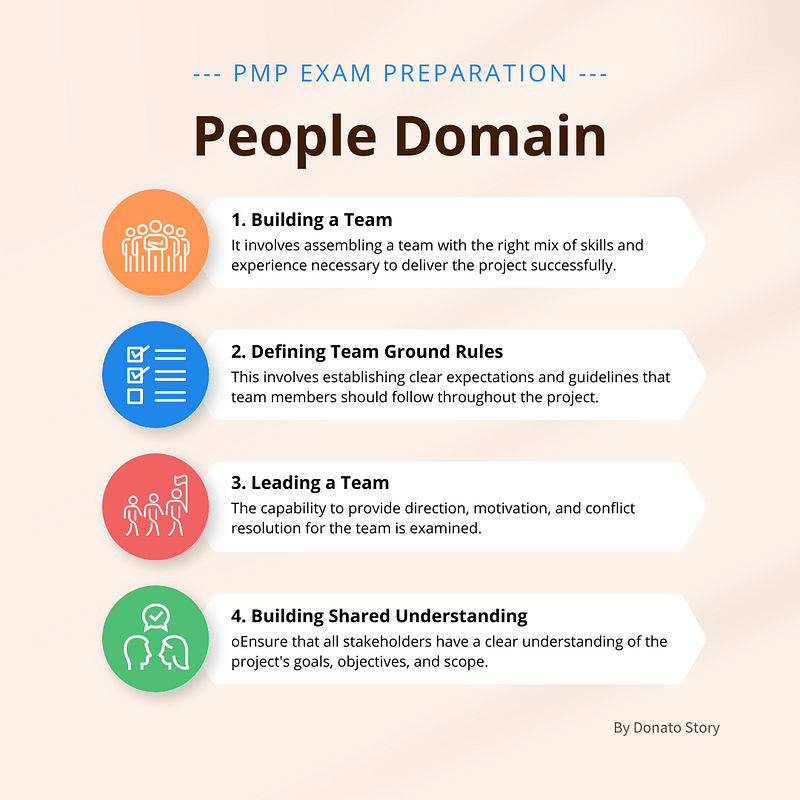
People Domain — 1/4 (Image by Author)
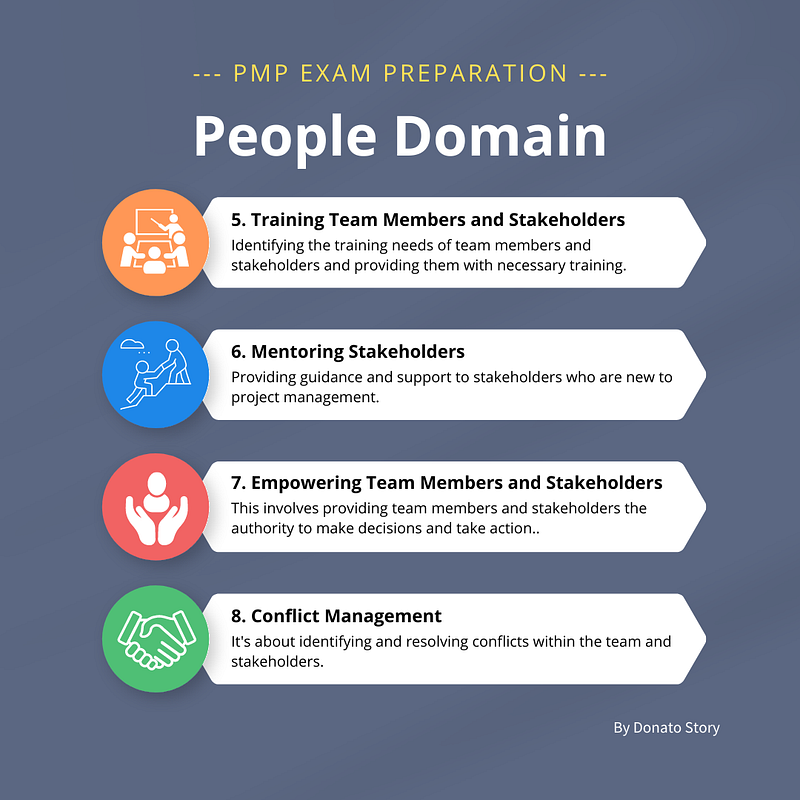
People Domain — 2/4 (Image by Author)
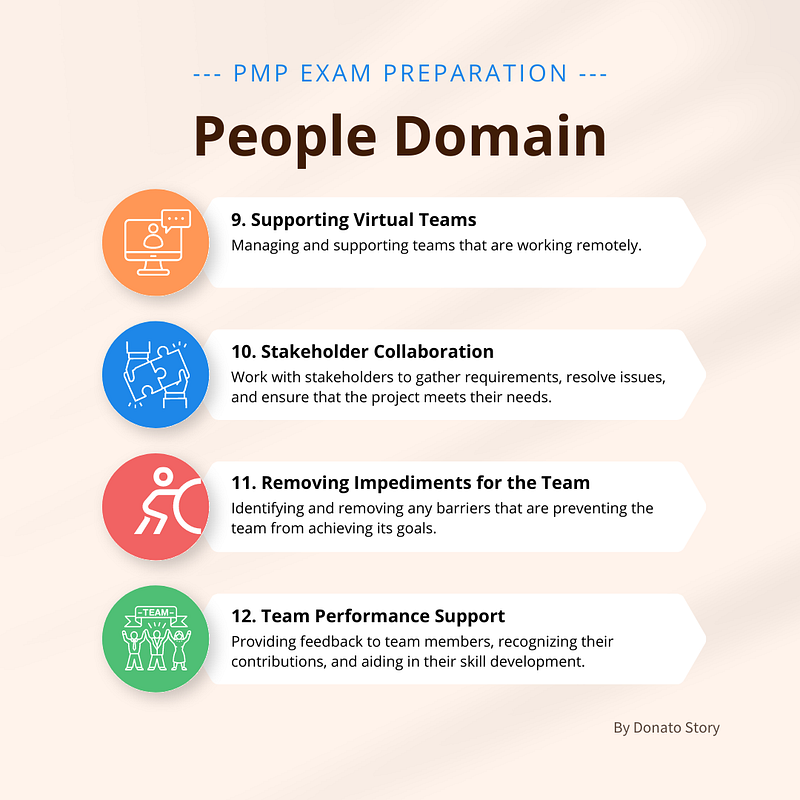
People Domain — 3/4 (Image by Author)
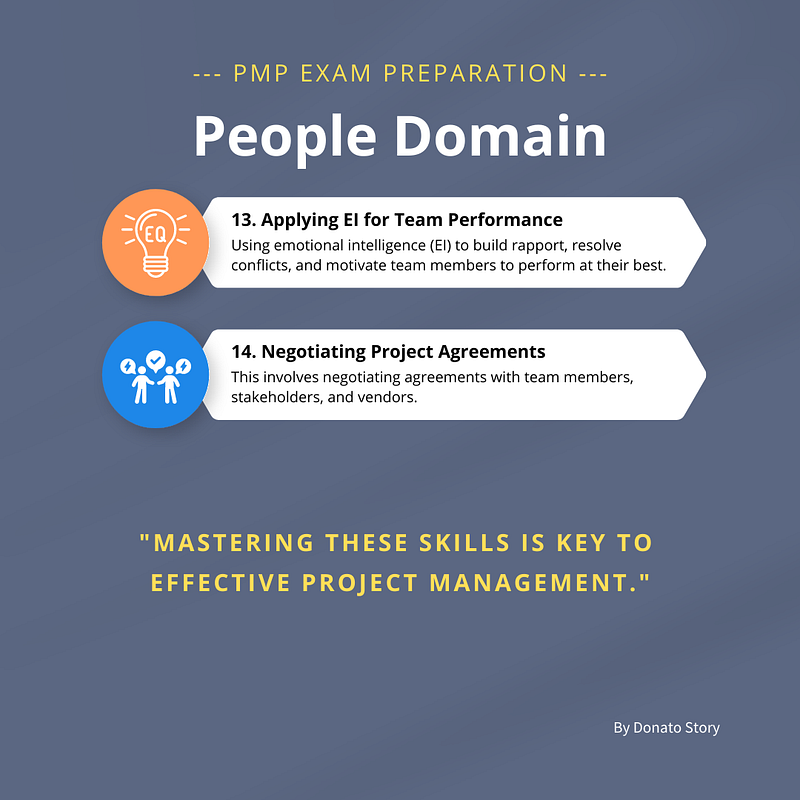
People Domain — 4/4 (Image by Author)
2) Process Domain
The Process Domain encompasses the technical aspects of managing a project:
- Determining Project Methodology: This involves selecting the best project management methodology and tools suited for the project.
- Establishing Project Governance: It’s about defining the framework for decision-making, roles, and responsibilities to ensure proper oversight and accountability throughout the project.
- Integrating Project Planning Activities: This involves coordinating and consolidating various planning efforts to create a comprehensive project plan that aligns with the project’s objectives and requirements.
- Managing Project/Phase Closure or Transitions: This involves developing strategies and procedures for smoothly concluding project phases or the entire project, ensuring a seamless handover and proper closure activities.
- Managing Scope: Defining, documenting, and controlling the project’s scope to ensure that the deliverables and work to be performed are clearly defined and managed.
- Managing Schedule: It involves developing a project schedule, sequencing activities, and tracking progress to ensure timely completion of project milestones and deliverables.
- Managing Budget and Resources: Establishing and monitoring the project’s budget, allocating resources effectively, and ensuring their optimal utilization throughout the project’s lifecycle.
- Managing Quality of Products/Deliverables: It involves establishing quality standards, implementing quality control processes, and conducting inspections to ensure that project deliverables meet the specified requirements.
- Risk Assessment and Management: It involves identifying potential risks, assessing their impact and likelihood, and developing risk response strategies to minimize their adverse effects on the project.
- Managing Procurement: This involves identifying necessary project resources and services, developing procurement strategies, and managing the procurement process, including vendor selection, contracts, and supplier relationships.
- Executing Projects with Urgency: Driving project activities forward efficiently and effectively to achieve project objectives and deliver the intended business value.
- Ensuring Knowledge Transfer for Project Continuity: Facilitating the transfer of project knowledge and lessons learned to ensure smooth transitions, organizational learning, and future project success.
- Issue Management: Identifying, tracking, and resolving project issues, obstacles, and challenges that arise during project execution.
- Managing Project Changes: It involves assessing and controlling project changes, including scope changes, and ensuring that they are properly reviewed, approved, and implemented.
- Managing Project Artifacts: Organizing, maintaining, and managing project documentation, reports, and other project artifacts to ensure accurate and up-to-date information for stakeholders.
- Managing Communication: Establishing effective communication channels, disseminating project information, and ensuring timely and appropriate communication among project team members and stakeholders.
- Engaging Stakeholders: Identifying, analyzing, and engaging stakeholders throughout the project lifecycle to ensure their involvement, support, and satisfaction.
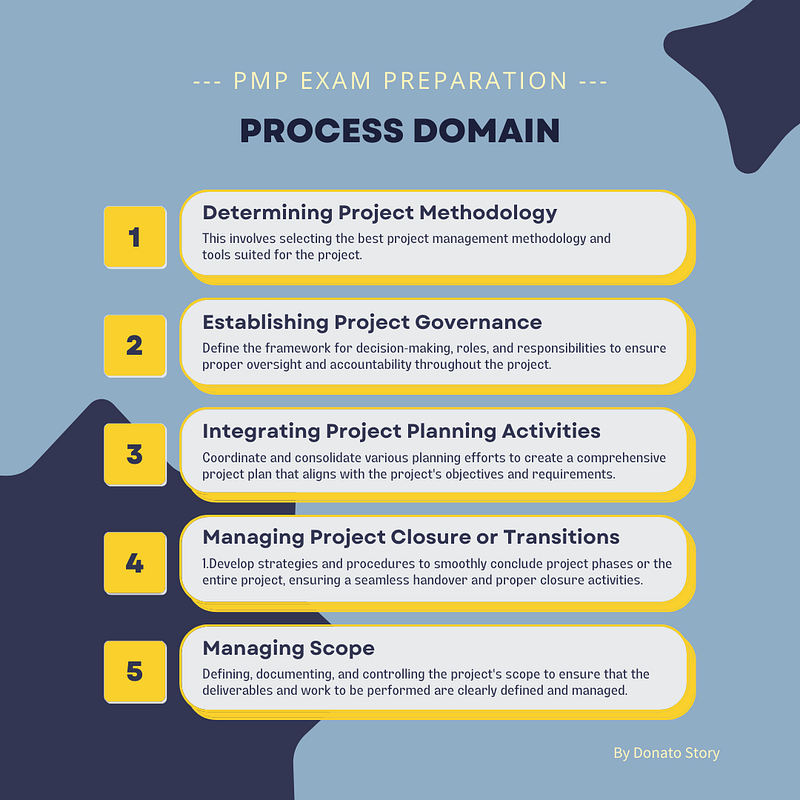
Process Domain — 1/4 (Image by Author)
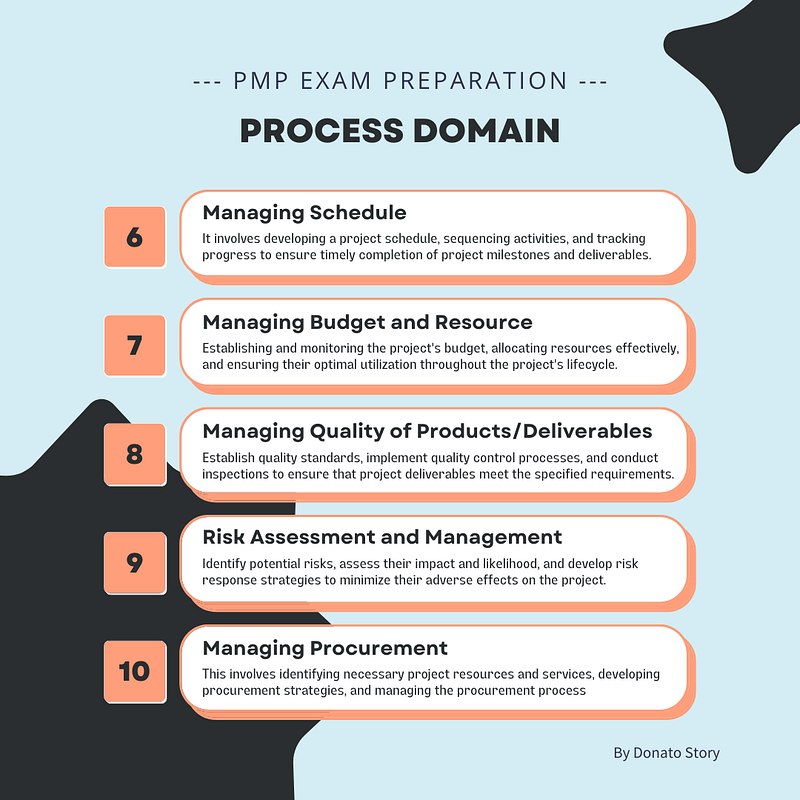
Process Domain — 2/4 (Image by Author)
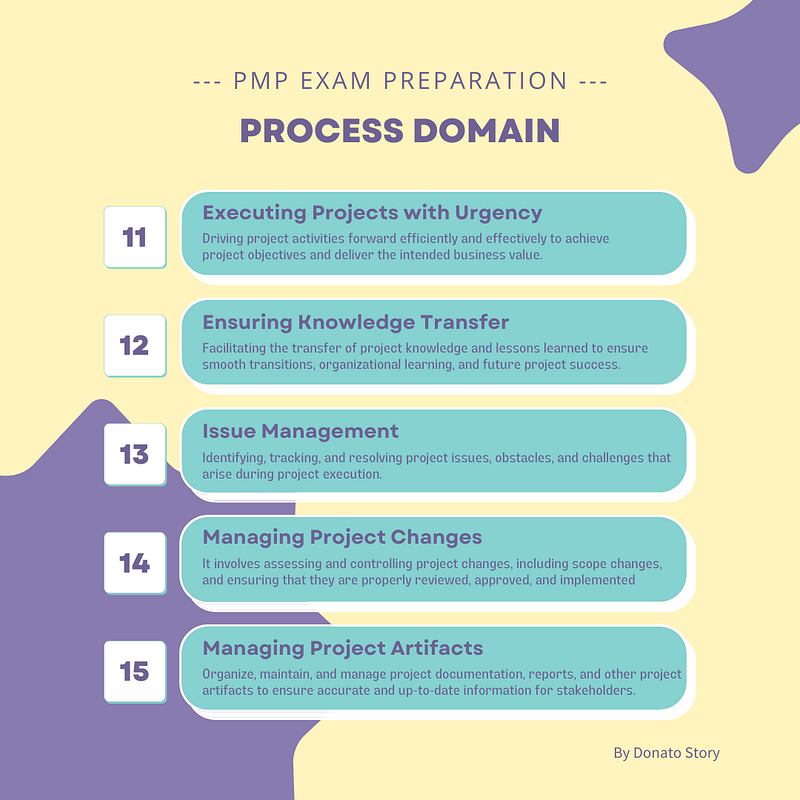
Process Domain — 3/4 (Image by Author)
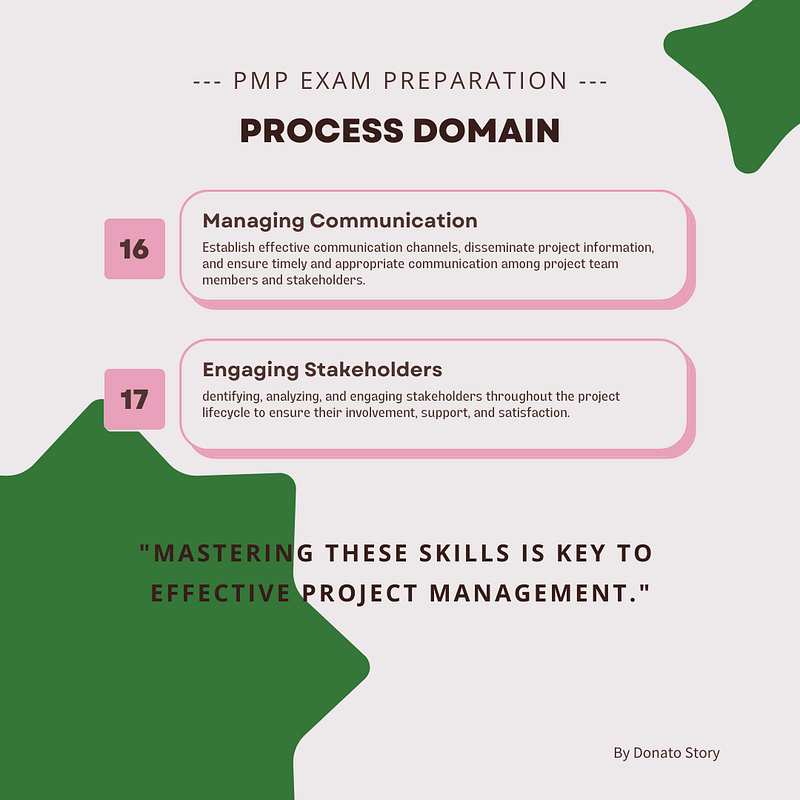
Process Domain — 4/4 (Image by Author)
3) Business Environment Domain
This domain focuses on the intersection of business and projects:
- Managing Project Compliance: Developing strategies and processes to ensure that the project complies with relevant laws, regulations, policies, and standards.
- Delivering Project Benefits and Value: Assessing and measuring the intended benefits and value of the project, and implementing strategies to ensure their realization and delivery.
- Addressing External Business Environment Changes: Monitoring and analyzing external factors, such as market trends and regulatory changes, that may affect the project’s scope, and taking necessary actions to address any impacts or adjustments required.
- Supporting Organizational Change: Identifying and managing the impact of the project on the organization and its stakeholders, and implementing change management strategies to facilitate smooth transitions and gain acceptance for the changes introduced by the project.
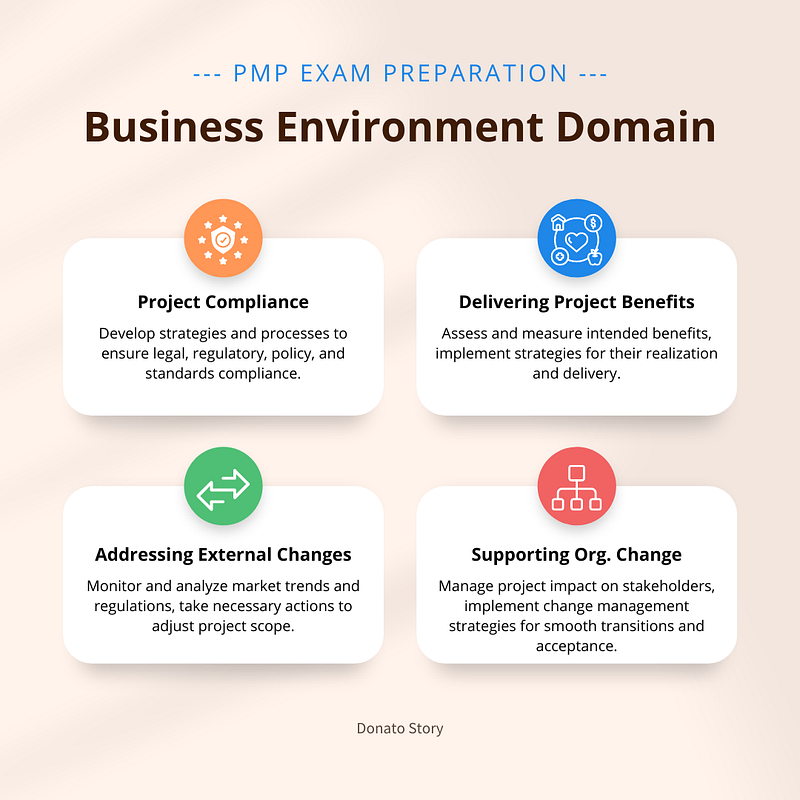
Business Environment Domain (Image by Author)
This comprehensive examination not only tests your theoretical knowledge but also your ability to apply project management principles in real-world situations. By preparing thoroughly for this exam, you’ll be taking a significant step towards becoming a certified Project Management Professional.
In the upcoming chapters, we’ll take a deep dive into each of these fascinating topics, demystifying their complexities and providing practical insights. To give you a true taste of the PMP experience, I’ll also present you with example questions and answers, the kind you’ll face in the real exam. Our voyage through the world of project management has just begun, so buckle up and get ready to unlock your potential in managing projects like a true PMP-certified professional!”
Find out more about my additional articles and projects by clicking on the links below. Thank you!
Data Science _Edit description_medium.com
Dashboard _Edit description_medium.com
Course_Review _Thai version_medium.com
Facebook: https://web.facebook.com/DonatoStory
Medium: https://medium.com/donato-story
Linkedin: linkedin.com/in/nattapong-thanngam
Originally published on Medium
Related

A Practical Guide to Building Agents
คู่มือปฏิบัติ: การสร้าง Agent ด้วย LLM โดย OpenAI

AI in the Enterprise โดย OpenAI
ถอดรหัสเคล็ดลับองค์กรระดับโลก ปลดล็อกศักยภาพ AI สร้างความได้เปรียบทางธุรกิจ

Best Practices for Bar Charts
Visualization Series — Episode 2

Best Practices for Line Charts
Visualization Series — Episode 3